Introduction
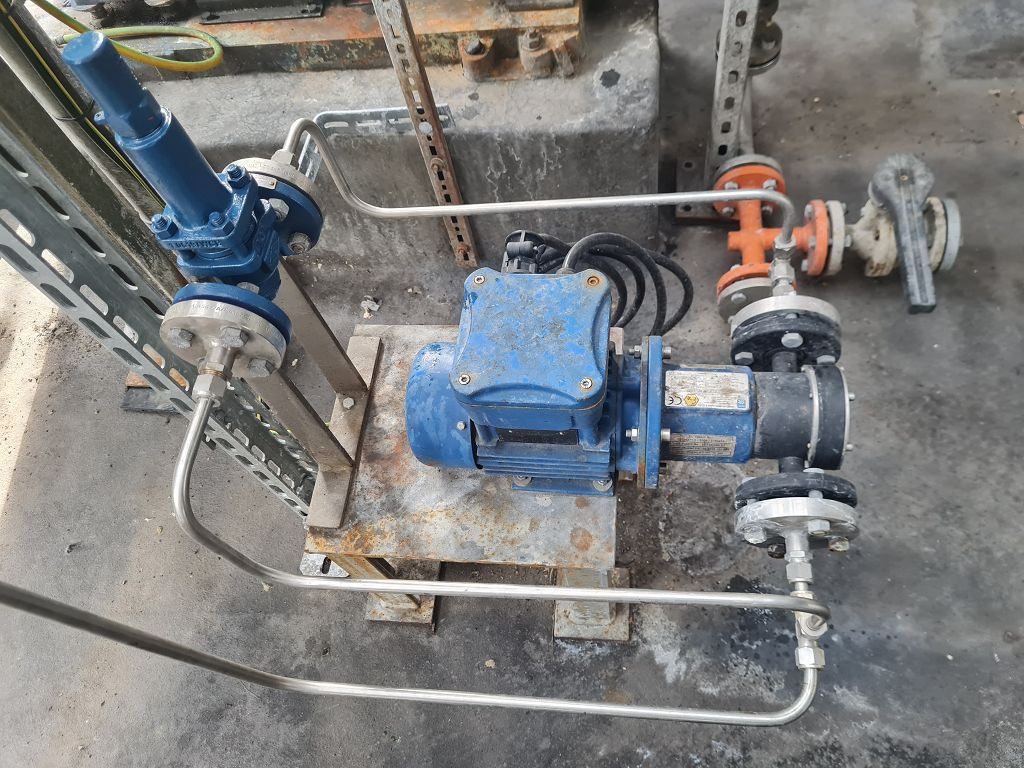
A leading manufacturer of seawater desalination plants in Turkey was looking for a reliable pump solution for pumping highly concentrated sodium chloride (NaCl, brine, salt brine, salt water). Because of the high corrosion requirements and the need for a durable, low-maintenance system, the choice fell on the chemical-resistant TEF-MAG® gear pump from MARCH PUMPEN.
What are desalination plants?
Desalination plants are used to remove salt from seawater or brackish water in order to provide drinking water or industrial process water. This technology is of essential importance particularly in regions with water scarcity. Using state-of-the-art processes such as reverse osmosis or thermal distillation, the salt is removed from the water to make it suitable for use. In addition to water treatment, the process also offers the potential to feed the salt produced as a waste product into the materials economy. It can, for example, be reused for industrial applications, in chemical production or for the food industry, creating a sustainable resource cycle.
The challenge
Seawater desalination places high demands on the pumps used. The brine being pumped is extremely aggressive, and conventional metal pumps are prone to corrosion and wear. The customer needed a solution that:
- offers high chemical resistance to concentrated NaCl
- is low-maintenance and has a long service life
- is a pump that can deliver small flow rates at high differential pressure almost pulsation-free and constantly (500 – 1200 l/h at 8 bar differential pressure)
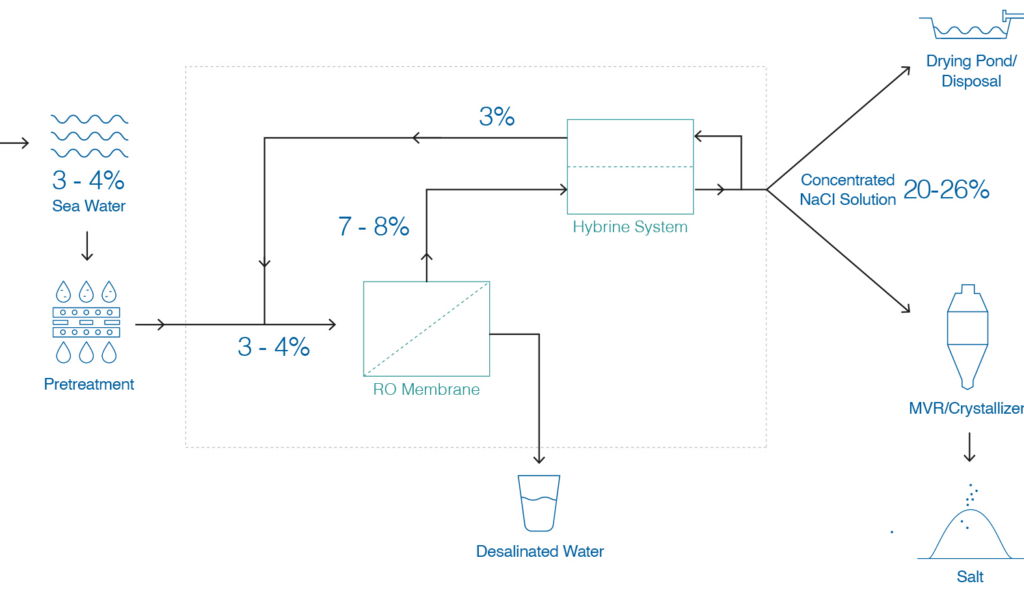
The seawater desalination process
Seawater desalination takes place in several steps, in which pumps play an essential role:
- Seawater intake – the raw water is freed of coarse impurities by the first filter stages.
- Pre-treatment – chemicals such as antiscalants are added to prevent deposits in the reverse osmosis membranes.
- Reverse osmosis (RO) – the water is forced at high pressure through special membranes that retain salt and impurities.
- Brine delivery with the TEF-MAG® gear pump – the resulting concentrated salt solution (brine) has to be removed efficiently. Because of the high salt concentration, our customer uses the TEF-MAG® gear pump, as it is corrosion-resistant, low-maintenance and energy-efficient.
- Further processing and return of the brine – the brine is then processed further to recover valuable minerals.
- Drinking water treatment – the purified water is treated further, remineralised and made available for consumption.
Solution: the TEF-MAG® gear pump
The TEF-MAG® gear pump from MARCH Pumpen was developed specifically for demanding applications in the chemical industry. Its non-metallic design and magnetic-drive offer decisive advantages:
- High chemical resistance: no corrosion thanks to non-metallic materials. In this case, both the TEF-MAG 800 and the TEF-MAG 1500 made of PVC were used.
- Leak-free design: the magnetic-drive design of the TEF-MAG eliminates the risk of leaks. This is particularly important with aggressive media that could damage the plant in the event of a leak.
- Precision and reliability: gear pumps enable precise and almost pulsation-free delivery of the medium at constant delivery pressure, which is an advantage for most processes, especially applications with small flow rates and high delivery pressure.
- Efficient and durable solution: reduced maintenance effort and longer operating times
Result and conclusion
The MARCH TEF-MAG® gear pump is the ideal solution for demanding applications in water treatment and the chemical industry. The chemical resistance, reliability and efficiency of the TEF-MAG series proved to be decisive advantages at Hyrec. This makes it an excellent choice for companies that need safe and durable pump technology under the most difficult and corrosive industrial conditions.