NEW Natural Energy West GmbH is a company specialising in the production of biodiesel and the processing of glycerine. NEW uses various pumped media and chemical reagents in its production processes. This case study focuses on the optimisation of biodiesel production through the use of the chemical-resistant TEF-MAG® gear pump made entirely of non-metallic materials, and on the shift of glycerine from a waste product to a main product.
The shift of glycerine to a main product in the biodiesel industry
The transition of glycerine from what was once considered a waste product to a main product in the biodiesel industry is closely linked to developments in subsidies and regulations for biodiesel in the late 1990s and early 2000s. During this period, many countries offered generous subsidies and incentives for biodiesel production, which led to rapid growth of the industry.
The high demand for biodiesel as an environmentally friendly fuel led to increased biodiesel production. This higher output resulted in an increased yield of glycerine as a by-product. Because biodiesel production was heavily subsidised, glycerine was initially a waste product that often had to be disposed of at considerable cost.
Over time, however, subsidy policies and market dynamics changed. Subsidies for biodiesel were reduced or discontinued, which led to an oversupply of glycerine and drastically lowered the price of this by-product. In response to these changed economic conditions, companies in the biodiesel industry looked for ways to use glycerine more efficiently and to make higher-value products from it. This contributed to the transformation of glycerine from a waste product to a main product.
Adapting to changed subsidy and market conditions was a decisive factor in the reassessment of glycerine in the biodiesel industry and its transformation into a valuable main product.
The challenge
NEW Biodiesel faced challenges in terms of efficiency, quality and sustainability, because the transfer and metering pumps used previously failed at regular intervals. Production downtime caused by pump failures impaired productivity and led to unnecessary operational interruptions. Maintenance and replacement of the pumps caused additional costs and increased the need for spare parts and labour hours. In addition, the challenge was to meet the safety requirements for operation in ATEX Zone 1 while minimising the environmental impact. The company was looking for a solution to extend the service life of the pumps, reduce operating costs and ensure safety in the plant.
Pumped media used in the production process
Methanol
Process engineering: methanol is used in biodiesel production as the alcohol component in the transesterification reaction. In this process, methanol reacts with vegetable oils or animal fats, producing biodiesel (fatty acid methyl ester, FAME) and glycerine. The methanol molecules replace the original glycerine molecules in the triglycerides of the raw materials, which enables the conversion into biodiesel. Methanol is a key component and the driving factor of the biodiesel production process.
Sodium methylate 30% in methanol
Process engineering: sodium methylate is a catalyst used in biodiesel production to accelerate the transesterification reaction. It is dissolved in methanol and added in this form. The catalyst promotes the conversion of triglycerides into FAME and glycerine. Adding sodium methylate in methanol increases the reaction speed and the efficiency of the process, which leads to higher biodiesel yields.
Hydrochloric acid 5-30%
Process engineering: hydrochloric acid is used as a catalyst in the transesterification reaction in biodiesel production. In this process, hydrochloric acid accelerates the conversion of triglycerides into fatty acid methyl ester (FAME). The exact concentration and method of use of hydrochloric acid can vary depending on the specific requirements of the production process. It is essential to ensure that the amount of hydrochloric acid used meets the process objectives and is at the same time safe and environmentally friendly.
Biodiesel (FAME)
Process engineering: biodiesel, also known as fatty acid methyl ester (FAME), is the end product of the biodiesel production process. After the transesterification reaction is complete, the biodiesel produced is recovered from the reaction mixture. This biodiesel can then be pumped into storage tanks and stored before it is ready for distribution and use. FAME is the main fuel resulting from biodiesel production.
Caustic soda 30%
Process engineering: sodium hydroxide, also known as caustic soda, is used as a catalyst in the transesterification reaction during biodiesel production. Adding caustic soda promotes the conversion of triglycerides into fatty acid methyl ester (FAME). The concentration of caustic soda can vary depending on the specific requirements of the production process and serves to optimise the pH value of the raw materials and to neutralise acids. It is important to control the amount of sodium hydroxide carefully in order to ensure an efficient reaction and maximise the quality of the end product.
Pump solutions from MARCH PUMPEN
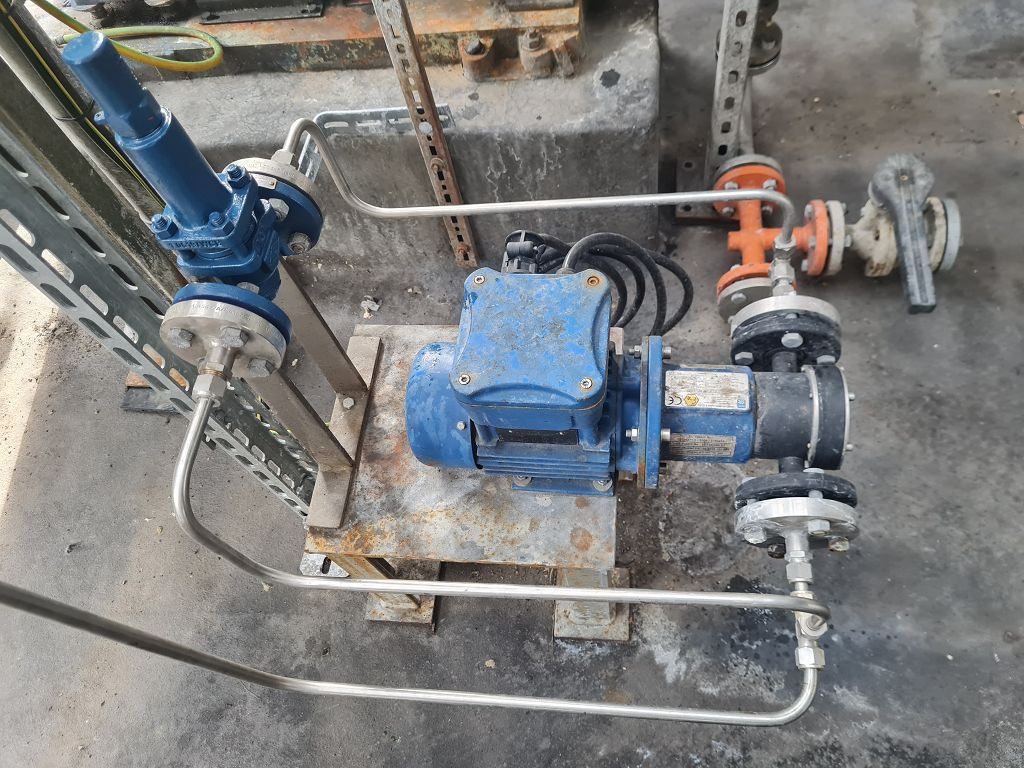
The TEF-MAG® chemical gear pump from MARCH PUMPEN was designed specifically for such requirements. Thanks to its entirely non-metallic wetted parts and the wide range of possible materials, the pump is the best choice on the market when it comes to chemical resistance, long service life and process reliability. The pump is used successfully both as a transfer pump and as a metering pump.