Denitrification is a process in wastewater treatment plants in which nitrogen is removed from the wastewater. The nitrate content of the wastewater is reduced by converting nitrate into nitrogen gas. One method of carrying out denitrification in municipal wastewater treatment plants is to add methanol as a carbon source.
Pumps used
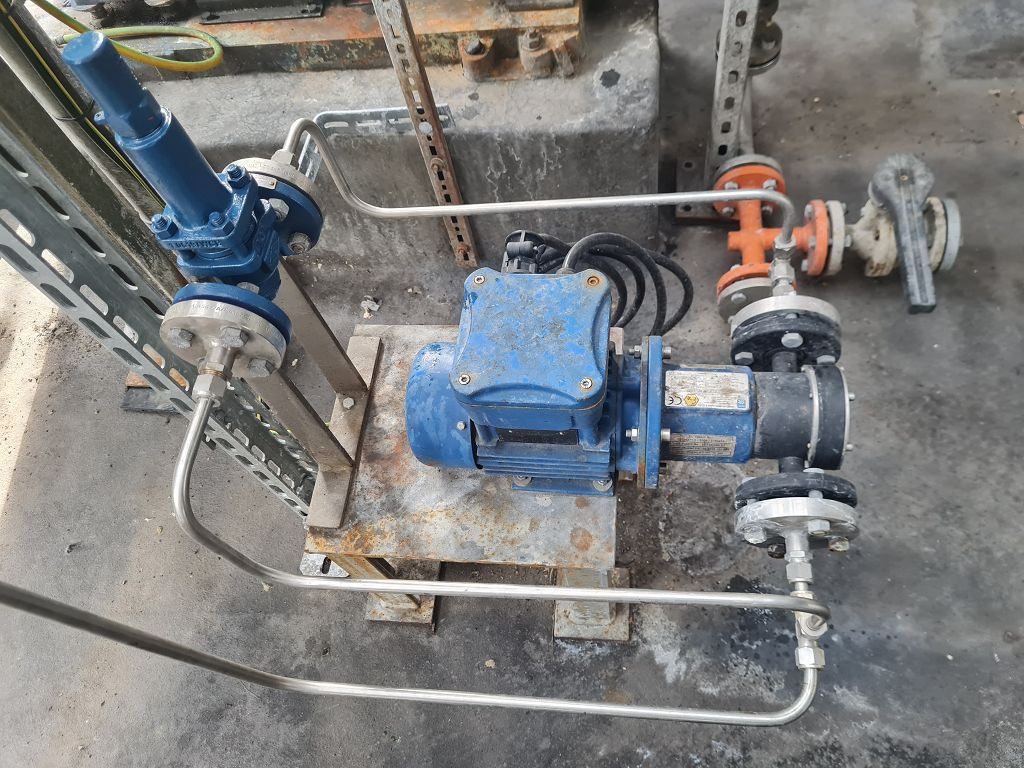
- VANE-MAG® MPA – corrosion-resistant, magnetic-drive vane pumps made of stainless steel for metering methanol
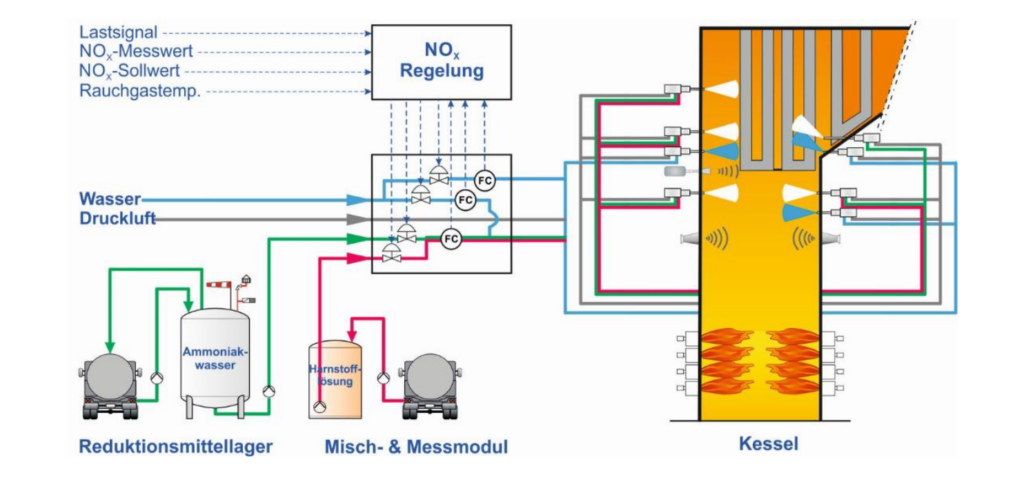
In denitrification with methanol, methanol is added to the wastewater. The methanol molecules serve as a carbon source for the denitrifying bacteria present in the treatment process. These bacteria use the methanol as an energy source and convert the nitrate in the wastewater into nitrogen gas. The resulting nitrogen gas then escapes into the atmosphere, while the cleaned water is treated further to return it to the natural water cycle.
The MPA rotary positive displacement pump from MARCH PUMPEN is very well suited as a metering pump for denitrification with methanol in municipal wastewater treatment plants and has already proven itself in several applications.
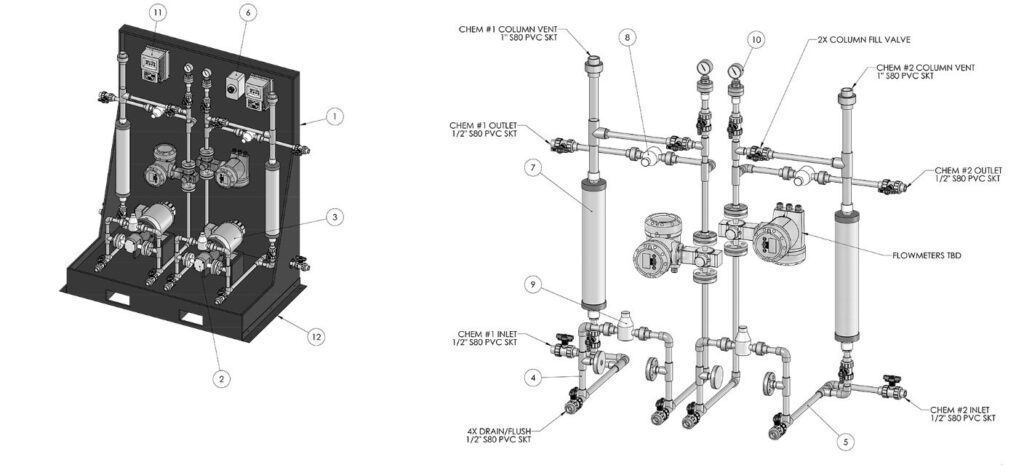
- Efficient methanol supply: the MPA vane pump is a precise and reliable rotary positive displacement pump that enables a controlled supply of methanol. Accurate metering of the methanol is crucial to provide the optimal carbon source for the denitrifying bacteria. The MPA pump ensures a steady supply and so facilitates the denitrification process.
- Low pulsation: the MPA series pumps are characterised by their low pulsation, which means that the methanol flows evenly and without abrupt pressure changes. This is important to maintain a stable environment for the denitrifying bacteria. A constant methanol supply improves the efficiency of the denitrification process and enables optimal nitrogen removal.
- Reliable performance: the MPA series rotary vane pumps are self-lubricating thanks to the use of carbon graphite and are therefore very reliable and durable. In wastewater treatment plants, which have to run continuously, a robust pump to industrial standard is required that withstands the demands. The MPA series sliding vane pumps offer solid performance and minimise downtime, which contributes to efficient denitrification.
Another important point underlining the suitability of the MARCH MPA sliding vane pumps for denitrification with methanol in municipal wastewater treatment plants is compliance with the ATEX directive, the use of a magnetic coupling and the fulfilment of the requirements of TA-Luft.
- Design in accordance with ATEX Directive 2014/34/EU: the ATEX Directive (Atmosphères Explosibles) is a European standard that sets out the safety requirements for equipment used in potentially explosive atmospheres. Methanol and other flammable substances may be present in wastewater treatment plants. The MARCH MPA pump meets the ATEX requirements and thus ensures safe operation in potentially explosive areas.
- Magnetic coupling: the MARCH MPA pump is equipped with a magnetic coupling. A magnetic coupling enables a hermetic seal between the drive side and the pump side without the need for a mechanical seal. This has the advantage that the risk of leaks and escape of methanol is minimised. Such a seal is particularly important to avoid environmental pollution and possible hazards from the release of flammable substances.
- TA-Luft conformity: the TA-Luft (Technical Instructions on Air Quality Control) is a German regulation that governs emissions of pollutants into the air. Wastewater treatment plants have to comply with strict air pollution control regulations. The MARCH MPA pump meets the requirements of TA-Luft and thus ensures that emissions of methanol or other harmful substances are reduced to a minimum.
By meeting the ATEX directive, using a magnetic coupling and conforming to TA-Luft, the MARCH MPA pump offers a safe and environmentally friendly solution for denitrification with methanol in municipal wastewater treatment plants.
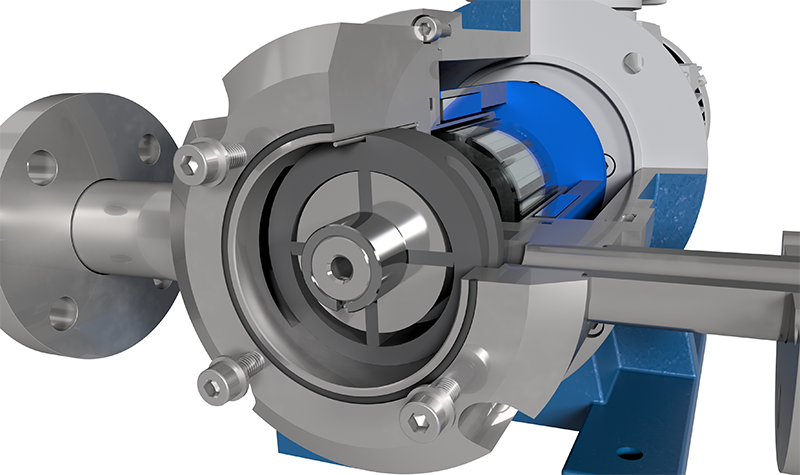
In summary, denitrification with methanol in municipal wastewater treatment plants is a method of nitrogen removal. The MARCH MPA pump is well suited to this process thanks to its efficient methanol supply, low pulsation and reliable performance. The VANE-MAG® MPA magnetic-drive sliding vane pumps have the advantage that the hydraulics themselves are particularly effective. These rotary positive displacement pumps, also known as rotary vane pumps or vane pumps, are typically used to pump or accurately meter liquids with low lubricating properties. The rotor of the pump has slots in which the vanes move radially and press against the inner wall of the stator bore or cam ring. In this way, as the rotor turns, a narrowing space is created between vane and stator, which draws in the medium. As the vane moves on, the medium is enclosed between vane and casing and carried to the pump outlet by the rotation of the rotor. The vanes, the stator and the thrust bearing are made of carbon graphite and have very good self-lubricating properties.
Rotary vane pumps are often used in applications that require pulsation-free, continuous delivery of very small quantities against high back pressure, for example in the chemical, food and pharmaceutical industries. They are maintenance-free and have a long service life because they consist of few parts that do not wear easily under ideal operating conditions.