A report on the importance, processes and technical requirements
Location and application
The Lülsdorf chemical plant is a state-of-the-art production site covering a wide range of chemical processes, from chlor-alkali electrolysis to the production of PVC and important precursors for polyester. In this multifaceted environment, the quality and purity of chemicals are of crucial importance. This report highlights the key role of process water, in particular dechlorination and pH adjustment, in ensuring the smooth running of the production processes.
KCl dechlorination
In some of the plant’s industrial processes, especially those involving chlor-alkali electrolysis, water can be contaminated with chloride ions, often in the form of KCl. This chloride load can lead to various technical challenges, including corrosion and product quality problems. Bisulphite is used to neutralise chlorine, which is often used as a disinfectant. It acts as a reducing agent and converts active chlorine into chloride ions:
Cl2 + H2O + SO32− → 2 Cl− + 2 H+ + SO42−
To make the process efficient and ensure that the reactions go to completion, accurate metering of the reagents is of crucial importance.
2 KOH + H2SO4 → K2SO4 + 2 H2O
Technical specification
For KCl dechlorination at the Lülsdorf chemical plant, the pumps have to meet the following parameters:
- chemical resistance to sodium bisulphite 40% and potash lye (KOH solution)
- pulsation-free metering of the liquids
- flow rate between 300 and 500 l/h
- differential pressure between 6.0 and 7.0 bar
- Magnetic-drive rotary positive displacement pump, external gear pump
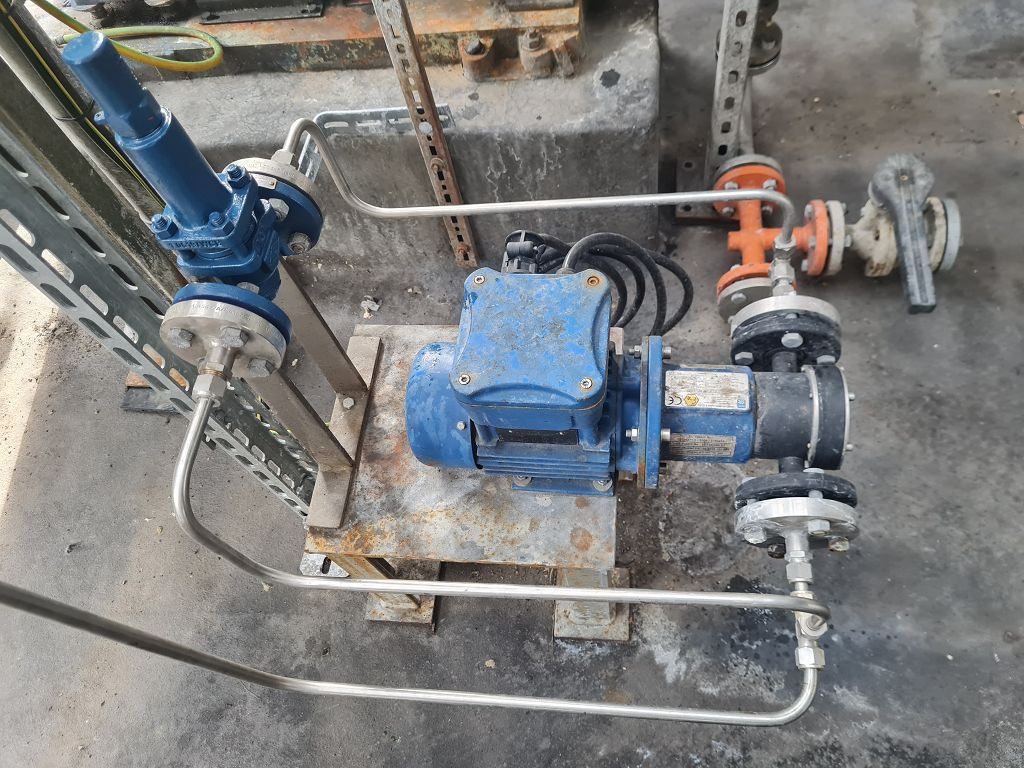
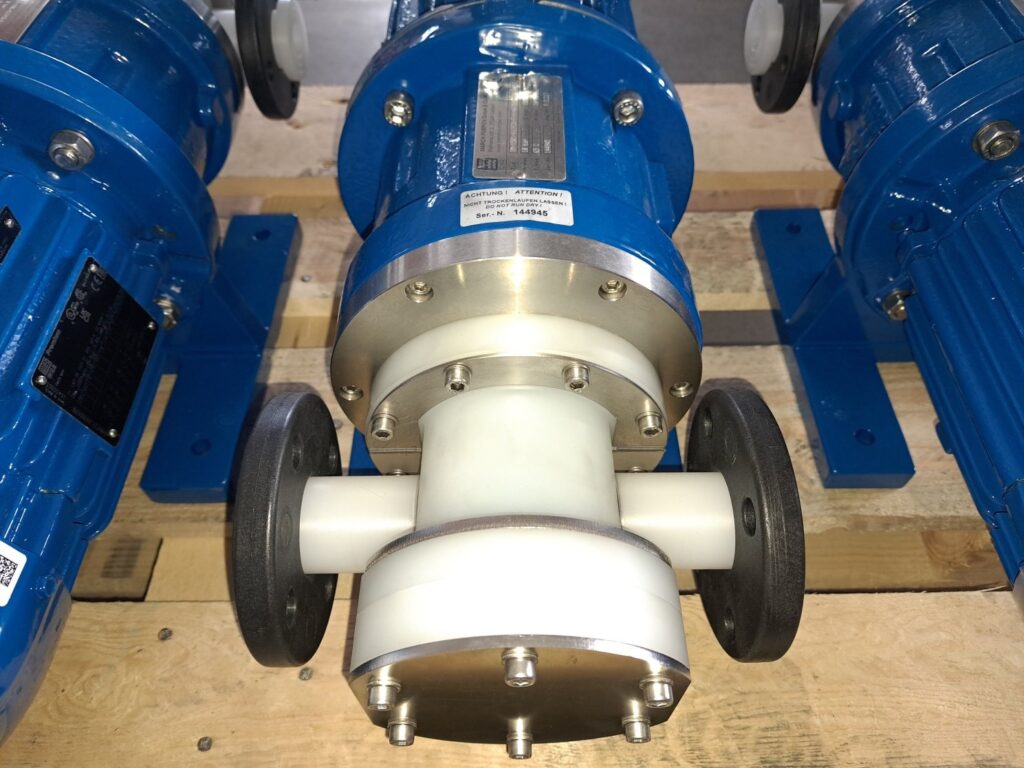
For this application, the customer chose the patented, magnetic-drive chemical gear pumps of the TEF-MAG® series from MARCH PUMPEN. All wetted parts are made without exception of non-metallic materials to ensure the best possible chemical resistance.
Pump and materials
| Pump casing | Polypropylene |
|---|---|
| O-rings | EPDM |
| Shafts | SSiC |
| Gears | z1 PEEK-HPV / z2 PTFEC |
| Plain bearings | Carbon graphite |