The selective catalytic reduction (SCR) process is an exhaust gas aftertreatment technology used mainly to reduce nitrogen oxides (NOx) in the exhaust gases of combustion engines. It was originally developed for diesel engines but is also used in gas turbines and some stationary combustion plants.
Pumps used
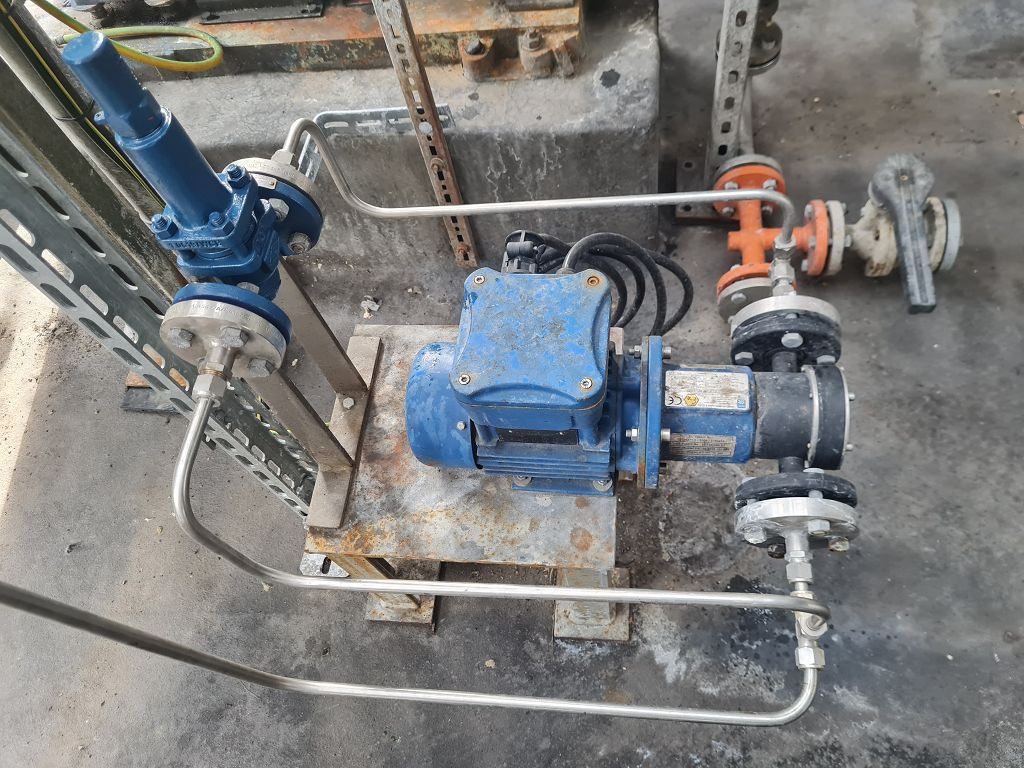
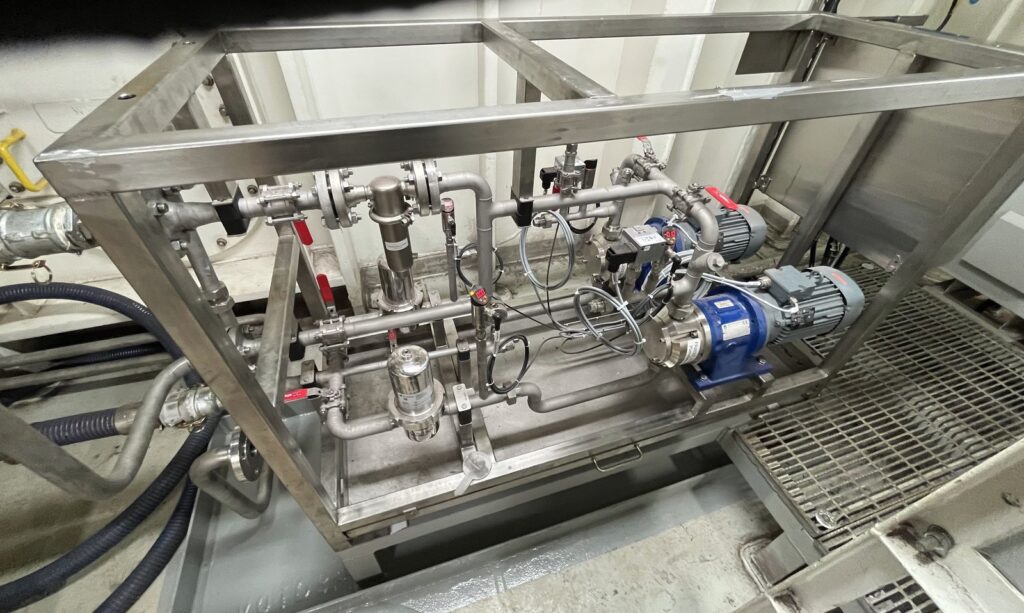
- VANE-MAG® MPA – corrosion-resistant, magnetic-drive rotary vane pumps made of stainless steel for pumping urea to reduce nitrogen oxides
- The process
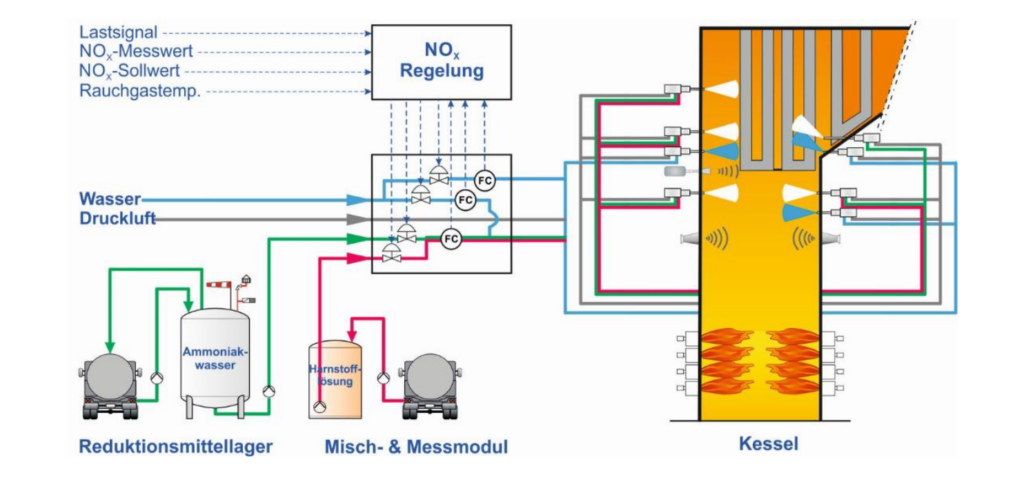
The SCR process works by injecting a urea-based reducing agent, usually AdBlue or diesel exhaust fluid (DEF), into the exhaust gas stream upstream of a special catalyst. The catalyst usually consists of a material such as titanium dioxide or zeolite, which contains metals such as vanadium, tungsten or molybdenum as the active component. These metals serve as catalysts to promote chemical reactions.
When the exhaust gas comes into contact with the reducing agent, the nitrogen oxide it contains reacts with the ammonia (NH3) produced by the hydrolysis of the urea. The reaction converts the harmful nitrogen oxides into harmless nitrogen (N2) and water (H2O). This process is called selective because it selectively reduces the nitrogen oxides while other components of the exhaust gas remain unchanged.
SCR systems offer an effective method of reducing NOx and enable vehicles and plants to comply with emission regulations. Nitrogen oxides are significant air pollutants that can contribute to air pollution and the formation of smog. By using the SCR process, vehicles and plants can reduce NOx emissions by up to 90 percent.
SCR systems are used in various areas, including road vehicles such as cars, trucks and buses, but also in shipping and in power plants. They help to improve air quality and reduce the environmental impact of combustion engines by reducing nitrogen oxide emissions.
The difference to SNCR (selective non-catalytic reduction) is the catalyst used, which lowers the temperature required for the reduction process to about 300 °C. The catalyst is therefore an accelerator for this process. SNCR only works at temperatures above 850 °C, which the exhaust gas does not reach in engine combustion processes.
Case study
A notable SCR system on a drilling platform off the west coast of Norway was designed and implemented by H+H Engineering & Service GmbH (www.huhes.de), a long-standing MARCH customer and experienced plant builder for SCR systems. The system is designed specifically for all 8 main engines of around 5,800 kW each. With all 8 engines running at full load at the same time, a urea quantity of 825 l/h at approx. 12 bar is required to reduce the nitrogen oxides to the targeted Tier III level. In practice only 1–2 engines run at part load at the same time to generate power. Nevertheless, the system must always be designed for the full-load case and the entire drive power.
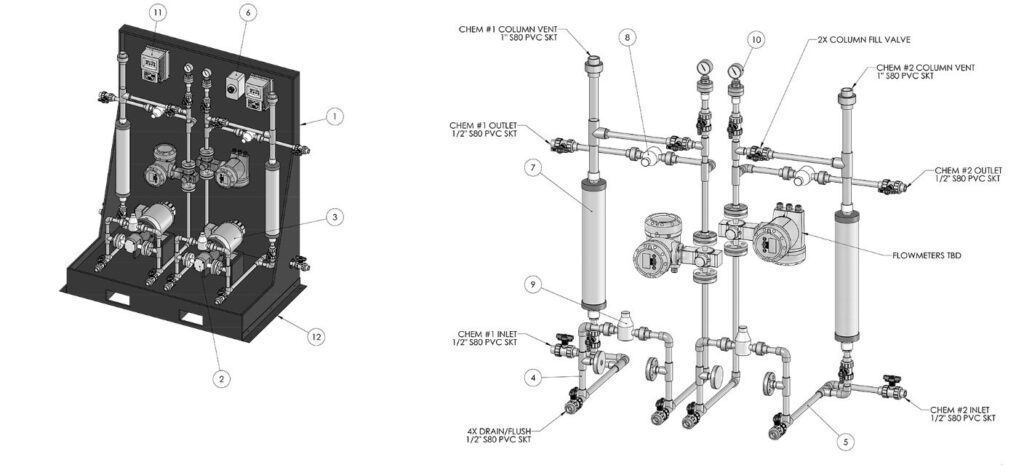
SCR systems generally require a pump differential pressure of approx. 8–9 bar. Because of the additional height difference on the platform of about 20–25 metres between tank, pump and metering unit, the total pressure loss in the system increases and pumps with a considerably higher differential pressure had to be used. MARCH PUMPEN supplied the solution with VANE-MAG® MPA rotary positive displacement pumps. The platform can only be reached by helicopter and boat, so the requirement for reliability is very high. The system has to run permanently for the installation to pay off. A redundant pump station was therefore supplied with 2 identical pumps, each of which can deliver the necessary maximum flow rate on its own.
The reducing agent, urea with a content of 40%, is injected into the exhaust line directly behind the engine exhaust outlets. A large 100 m³ tank located in one of the platform’s columns is used to store the reducing agent. The pump station stands directly next to the tank at the same level as the tank floor. The pumps always work at maximum output and deliver the maximum amount of urea. The part required for the SCR process is directed to the system’s metering equipment, while the excess circulates back into the tank via an overflow valve.
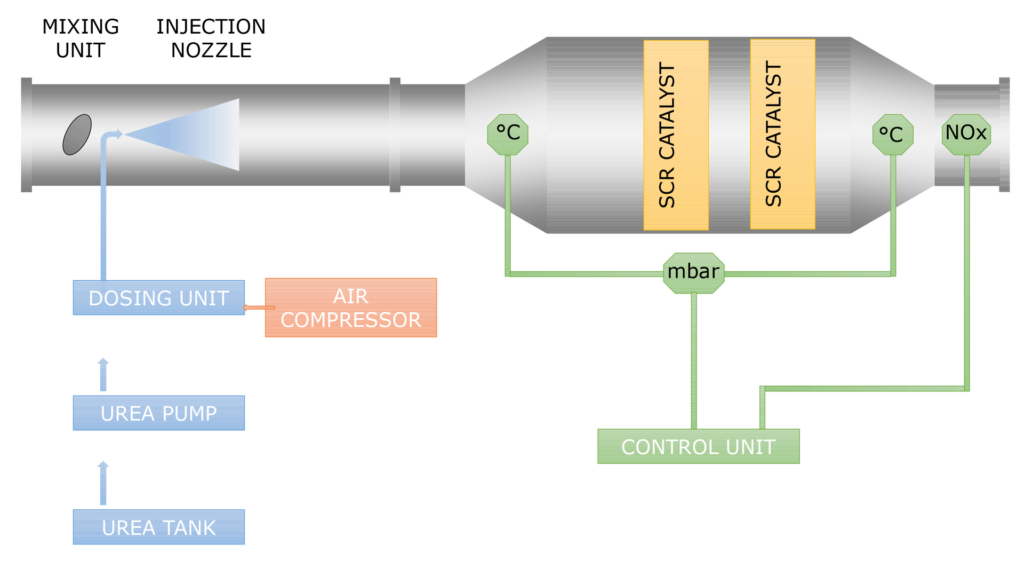
By implementing this SCR system on the drilling platform and ship engines, an effective reduction of nitrogen oxides is achieved in order to comply with strict environmental regulations and protect the climate. The system enables controlled and precise metering of the reducing agent to clean the exhaust gases of the marine engines and minimise air pollution. By reducing harmful emissions, the SCR system contributes to improved air quality. H+H Engineering & Service GmbH has demonstrated its expertise in developing and implementing tailor-made SCR solutions for ships and thus contributes to the sustainability, environmental compatibility and climate protection of the maritime industry.