What is aramid?
Aramid fibres belong to a class of heat- and flame-resistant, extremely robust synthetic fibres used primarily in special applications. The term “aramid” derives from “aromatic polyamides”. These polyamides consist of molecules with rigid, linear structures that give the fibres their special strength and temperature resistance. Aramid fibres are characterised by high tensile strength relative to their weight and retain their strength and shape even at high temperatures. They are resistant to many chemicals and solvents and do not conduct electricity.
Because of these unique properties, aramid fibres are used in:
Protective clothing: e.g. in fire-protection clothing for firefighters or in bulletproof vests.
Aerospace: here they are used for components that have to be both lightweight and stable.
Sports equipment: for example in racing bicycle tyres to increase puncture resistance.
Industrial applications: such as ropes and cables where high strength and/or temperature resistance is required.
Well-known aramid products include Kevlar® (from DuPont), Twaron® (from Teijin) and Creslan® (from Hyosung). Kevlar® in particular is widely known and is often used synonymously for aramid fibres, although it is actually one specific aramid fibre brand.
In summary, thanks to their unique combination of properties, aramid fibres offer immense advantages in various special applications, especially where robustness, durability and heat resistance are needed.
The aramid manufacturing process
The production process of aramid is demanding and requires precise sequences in order to achieve the special properties of these high-performance fibres. Sulphuric acid (H2SO4) plays a central role here, especially in the wet spinning process for producing aramid fibres.
In the production of aramid fibres, especially in the well-known process for producing poly(p-phenylene terephthalamide), sulphuric acid acts as the spinning liquid. It acts as a solvent for the aromatic polyamide used to make aramid fibres. The polymer is dissolved in concentrated sulphuric acid to obtain a spinning dope. This solution is forced through fine nozzles to form filaments. These filaments are placed in a coagulation bath, usually a dilute sulphuric acid solution, where the polymer is precipitated and fibre formation begins. The high sulphuric acid concentration allows the polymer chains in the solution to align before fibre formation starts, an essential step in achieving the impressive tensile strength of aramid fibres.
After the spinning process, the fibres are neutralised with water or an alkaline solution to remove sulphuric acid residues and stabilise the fibres.
The use of sulphuric acid in this process requires specialised pumps that are corrosion-resistant and can withstand the aggressive nature of the acid. The choice of a suitable sulphuric acid pump for the production of aramid fibres is therefore essential. It must ensure that the acid is transported effectively and safely, without the risk of leaks or failures.
Pump design data
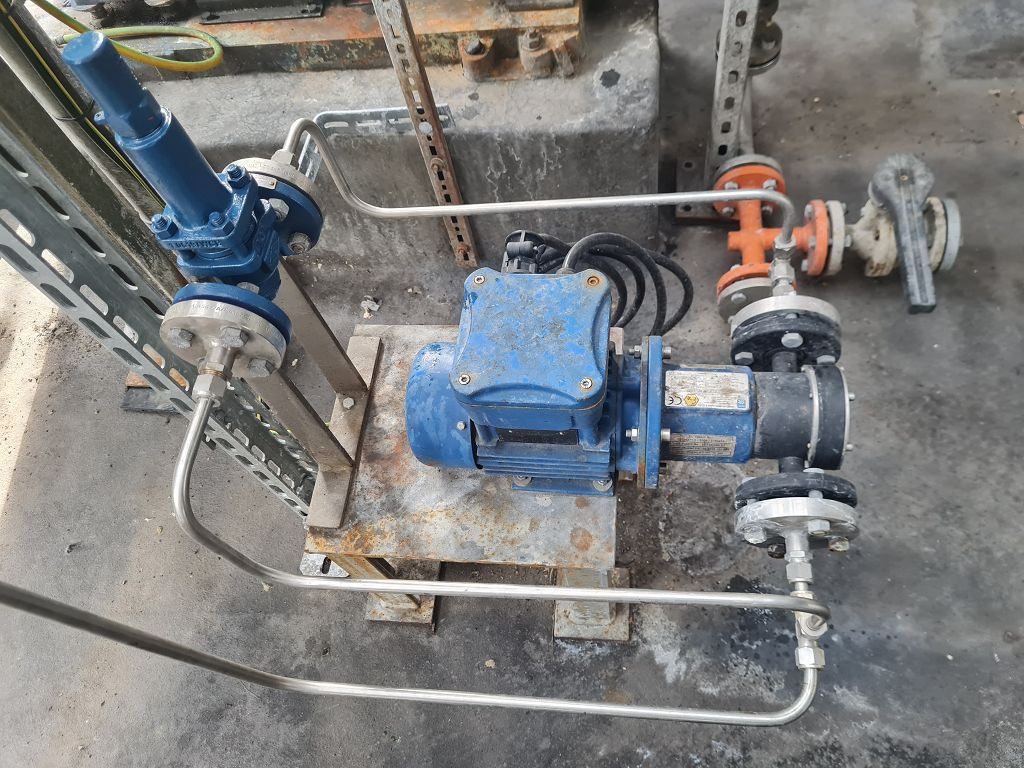
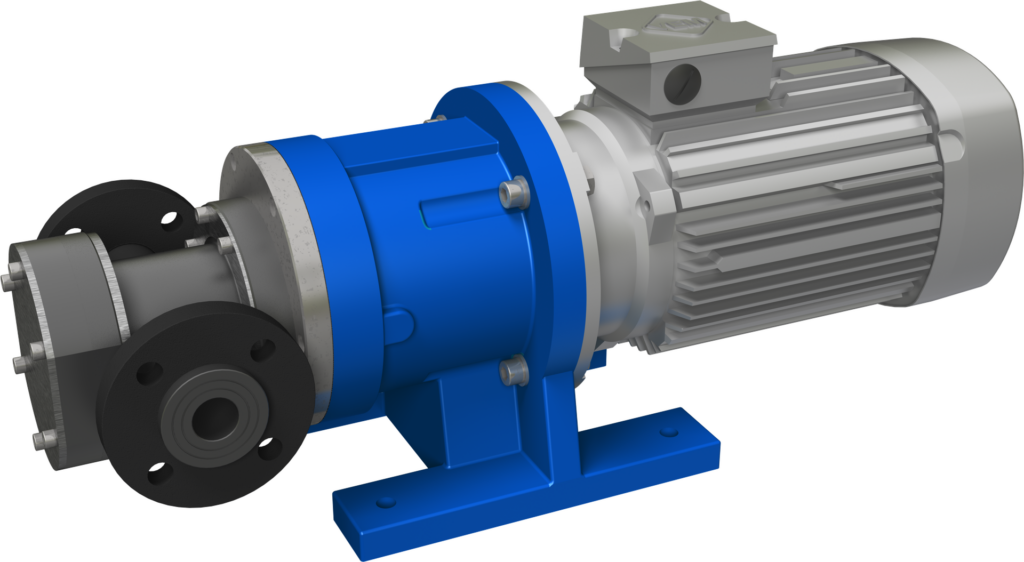
The magnetic-drive, fully non-metallic external gear pump TEF-MAG® is used in the production process. The chemical-resistant gear pump is designed to deliver continuously between 500 l/h and 1000 l/h at a differential pressure of 2 bar to 6 bar in the process. The TEF-MAG® 1500 pump is operated with a frequency converter, and the respective operating point is adjusted by changing the speed.
| Casing | PVDF natural |
|---|---|
| O-rings | FFKM |
| Shafts | SSiC |
| Plain bearings | SSiC |
| Gears | z1 PTFEC / z2 PTFEC |
Advantages
Thanks to the excellent chemical resistance and the excellent metering capability of a gear pump at low flow rates and high differential pressure, the TEF-MAG® is the optimal solution for this type of application. Magnetic-drive pumps are generally regarded as maintenance-free, which means that considerable maintenance and repair costs can be saved over the life cycle of the pump.